


Description
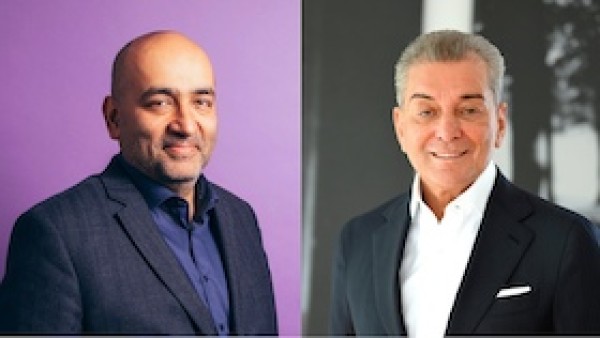
People walk on the street. The public is described as a marketplace of ideas. Glass parliaments promise political transparency: When talking about politics, we often use metaphors and references to architecture and urban planning. And indeed, 'star architects' praise their designs as contributions to the success of democracy. But is there really such a thing as democratic architecture? Moderated by art historian Charlotte Klonk, political scientist and author Jan-Werner Müller and former Chancellor Olaf Scholz discuss the connection between urban planning, political thinking, and power. They look behind the often idealized places like the Agora or the Forum, critically examine the symbol of German democracy, the much-celebrated Reichstag dome in Berlin, explore planned cities in the Egyptian desert, and Louis Kahn's brutalist parliamentary building in Dhaka, the capital of Bangladesh. At the end of this horizon tour, the question remains about the building blocks for thinking about democracy and architecture. How can architecture succeed in giving citizens the opportunity to perceive each other from surprising perspectives again and again? Jan-Werner Müller, born in 1970, studied at the Free University of Berlin, in London, Oxford, and Princeton. Since 2005, he has taught political theory and intellectual history at Princeton. He is a co-founder of the European College of Liberal Arts (ECLA). His essay "What is Populism?" (2026) is considered a central text for understanding contemporary political developments. Jan-Werner Müller writes, among others, for Foreign Affairs, Neue Zürcher Zeitung, The New York Times, and Süddeutsche Zeitung. In 2025, he was elected a member of the Berlin-Brandenburg Academy of Sciences. Charlotte Klonk, born in 1965, studied art history at the universities of Hamburg and Cambridge. After her doctorate at Cambridge, she was a Junior Research Fellow at Oxford University and a lecturer at the University of Warwick. Since 2011, she has been a professor of art and image history at Humboldt University in Berlin, with research focuses on the history of museums, modern media, and the political and social power of images. Former Chancellor Olaf Scholz, SPD, born in 1958 in Osnabrück and raised in Hamburg, was the ninth Federal Chancellor of the Federal Republic of Germany from December 2021 to May 2025. Previously, he served as SPD Secretary-General under Chancellor Gerhard Schröder (2002-2004), Federal Minister for Labour and Social Affairs (2007-2009), First Mayor of Hamburg (2011–2018), and Federal Minister of Finance and Vice Chancellor (2018-2021). Please note that no bags or items larger than DIN A4 are allowed into the hall for this event. Please leave them at the cloakroom. Additional information:
Coats, backpacks, and bags larger than DIN A4 should be handed in at the cloakroom.
Highlights
- Discussion on democratic architecture
- Moderation by Charlotte Klonk
- With Jan-Werner Müller and Olaf Scholz
General Information
The event takes place at Urania Berlin and discusses the connection between urban planning and political thinking. Experts debate the role of architecture in democracy and examine various historical and modern examples.
Location
 An der Urania 17, 10787 Berlin, Germany
Loading map...
How to get there

Event Calendar
October 2026

Event Media


More events in Berlin

 Ticket: CHF 7.49
Komisch
 7:30 pm
 Sep 29, 2026
- An der Urania 17, 10787 Berlin, Germany
 Ticket: CHF 7.49
Don't be Indignant!
- 7:30 pm
- Oct 1, 2026
- An der Urania 17, 10787 Berlin, Germany
 Ticket: CHF 0
Antifascist Economic Policy
- 7:30 pm
- Oct 5, 2026
- An der Urania 17, 10787 Berlin, Germany

Ready to Host an Event?
Create, manage, and promote your event in minutes.