


Description
Accepting borders has never been easy for modern humans. Homo sapiens, originating from Africa, populated the world, encountered Neanderthals and Denisovans, crossed open seas to Australia for the first time, and reached the most remote islands of the Pacific with tiny canoes over thousands of kilometers. Archaeology and archaeogenetics show that migration and mixing have shaped human history from the very beginning. The lecture spans from the first migrations, the spread of early farmers and steppe nomads, to the major population movements of modern times. It asks what remains of the borders that surround us today and what possibilities still lie ahead. Prof. Dr. Johannes Krause is director of the Max Planck Institute for Evolutionary Anthropology in Leipzig. He contributed to decoding the Neanderthal genome and was able to identify a new human form, the Denisovan, for the first time in 2010. In 2026, he received the Gottfried Wilhelm Leibniz Prize.
Highlights
- Lecture by Prof. Dr. Johannes Krause
- Director of the Max Planck Institute for Evolutionary Anthropology
- Topics: Migration and mixing in human history
General Information
The lecture by Prof. Dr. Johannes Krause addresses migration and mixing in human history. It highlights the migrations of Homo sapiens and their impact on today's borders. The event takes place at the DAI Heidelberg.
Location
 Sofienstraße 12, 69115 Heidelberg, Germany
Loading map...
How to get there

Event Calendar
November 2026

Event Media


More events in Heidelberg
 Ticket: CHF 16.37
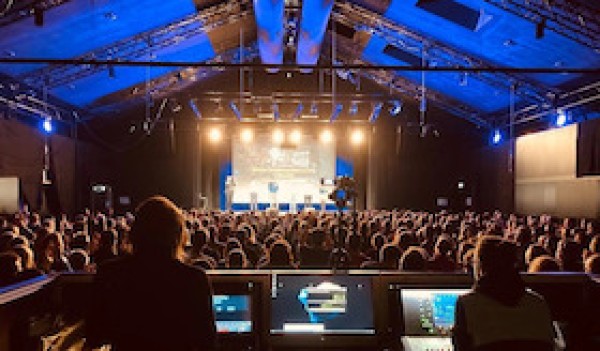
Heidelberger Science Slam
 8:00 pm
 Oct 9 - Nov 24, 2026
- Marlene-Dietrich-Platz 3, 69117 Heidelberg, Germany
 Ticket: CHF 14.88
Hamed Abdel-Samad - With God on their Side
- 7:00 pm
- Oct 15, 2026
- Sofienstraße 12, 69115 Heidelberg, Germany
 Ticket: CHF 14.88
Hannah Monyer
- 5:00 pm
- Oct 18, 2026
- Sofienstraße 12, 69115 Heidelberg, Germany


Ready to Host an Event?
Create, manage, and promote your event in minutes.