

WO-Basel-sing-and-play-along 2026: The Great Final Chord
 Domplatz 16, 4144 Arlesheim, Switzerland
- Arlesheim, Switzerland

 0
0 0
0 0
0
Description
Continuing the tradition since 2019 of performing a cantata from Bach's Christmas Oratorio during Advent, the concert program in 2026 features the first cantata, with the opening text "Jauchzet, frohlocket!". This is a church cantata from 1734 for the first Christmas Day, composed by Johann Sebastian Bach as the first part of his Christmas Oratorio. Bach conducted the first performances with the Thomanerchor on December 25, 1734, during the morning and evening services in Leipzig's main churches. Symbolically, the six-year cycle concludes precisely with the first cantata. The beginning is the end, and the end is, in a sense, the beginning.
The program at the end of the cycle is complemented by selections from Handel's "Messiah" and a musical piece that has become a "must-have" for this project, captivating both audience and musicians: "O magnum Mysterium" by Raitis Grigalis in a version for choir, audience, and bells. Details of the performances (including world premieres) 2026 December 5, 19:00 Church Hochwald, followed by aperitif
December 6, 17:00 Cathedral Arlesheim
December 10, 19:30 City Church Liestal
December 11, 17:00 Church Gempen
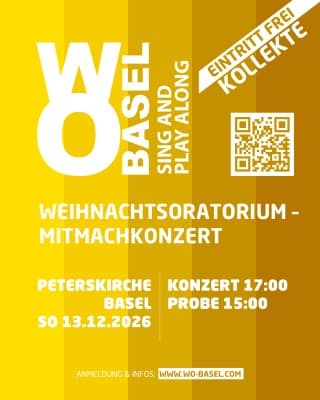
December 13 (Sing-and-play-along rehearsal at 15:00) 17:00 Peterskirche Basel Performers Ivanna Ivanovic – Alto,
Cyril Escoffier – Tenor,
Santiago Garzón – Bass. Kesselberg Ensemble (17 instrumentalists)
Chor Gempen Hochwald, Chamber Choir Munzach, and on December 13:
Sing-and-play-along choir and orchestra, students of the International Community Music School Basel, Prima Vista String Orchestra of the Basel Music School Ilze Grudule – Conductor Program
Beat Vögele New composition – World premiere
Johann Sebastian Bach "Christmas Oratorio. Cantata I" BWV 248/1
George Frideric Handel excerpts from “Messiah” (HWV 56) Raitis Grigalis "O Magnum Mysterium"
Advent carols with audience ABOUT THE PROGRAM: Since 2019, the choir Gempen Hochwald, Chamber Choir Munzach, and the Kesselberg Ensemble have been performing a cantata from Bach's Christmas Oratorio during Advent. With the first cantata, the project now concludes this Advent concert cycle with a festive final chord: The beginning is the end, and the end is, in a sense, the beginning.
The program opens with Beat Vögel's "Praefationes" (World premiere – commissioned work 2026), composed specifically for this project and our ensemble; the profound text is also by the composer himself. The sensual work seeks orientation in uncertain times, with the word "We" holding central symbolism: Like Bach's opening chorus, which calls for collective rejoicing in the plural ("Jauchzet, frohlocket!"), the choir and orchestra here invite the formation of a sonic and human unity through the symbolic "We"-form. This is followed by Johann Sebastian Bach's Christmas Oratorio (Cantata I), the work's famous centerpiece, which celebrates pure joy of life. The choir forms a powerful foundation: with festive timpani and trumpets, it captivates the audience from the grand opening movement and fosters deep community in the chorales. While the tenor narrates the story, the alto and bass voices give voice to human emotions – in an intimate dialogue between gentle woodwinds and the powerful confidence of trumpet sound. The evening is further enriched by George Frideric Handel's "Messiah" with festive, stirring excerpts like "Ev'ry valley" and "Hallelujah" from the renowned Baroque masterpiece. A beloved tradition of this project is Raitis Grigalis’ "O Magnum Mysterium" for choir, audience, and bells – an emotional highlight that unites the entire concert space in a dense, connective atmosphere. Equally anchored is the communal singing of well-known Advent carols in a large circle with the audience, providing a festive conclusion to the evening.
Experience a program that celebrates musical community and dissolves the boundaries between stage and audience! ABOUT "Praefationes" (World premiere/commissioned work by Beat Vögel): The work is based on a text written by the composer himself. It centers on a phrase reflecting on "beginning," "birth," "breath," and "earth" in the context of today’s times. "To be at the end of Latin" – this idiom forms the bridge to a deep societal uncertainty: Where are the economic, social, and global solutions that we currently do not see? While Christian faith offers traditional solutions – which justifies the work's function as "prelude" (Praefationes) to a Bach cantata – the piece is explicitly designed to be understood also in a purely secular context.
Another core aspect is concern for the state of our language and culture. The work questions the impact of AI-generated texts, pre-made music, and the flood of empty buzzwords on the human organism. This overstimulation is made tangible as a physical burden (analogous to microplastics in the body). Symbolically, this is represented by the image of "rolling stone letters" in the poem.
Praefationes functions in two senses: it serves as an introductory prologue to a Bach cantata but also stands as a confident, decontextualized opus on its own.
Highlights
- Performance of Bach's "Jauchzet, frohlocket!"
- Supplemented by Handel's "Messiah" and "O magnum Mysterium"
- Several concerts in different churches
General Information
The concert "WO-Basel-sing-and-play-along 2026" concludes the six-year cycle with the first cantata from Bach's Christmas Oratorio. Performances take place in several churches, accompanied by renowned soloists and the Kesselberg Ensemble.
Location
Domplatz 16, 4144 Arlesheim, Switzerland
Loading map...
How to get there

Event Calendar
December 2026

Event Media

More events in Arlesheim
 Ticket: CHF 20
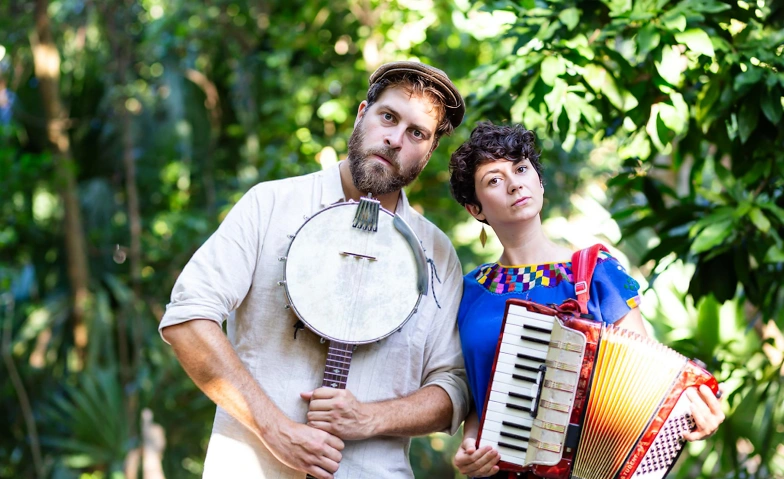
Tandem
 8:00 pm
- Oct 24, 2026
- Trotte Arlesheim, Ermitagestrasse 19, 4144 Arlesheim, Switzerland
 Ticket: CHF 1
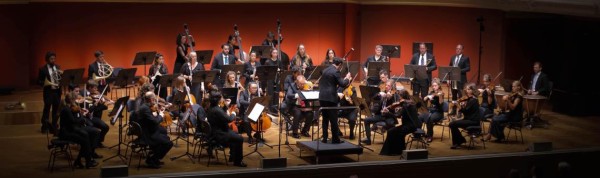
«Von Volksklängen beflügelt» Concert in Arlesheim – I TEMPI
- 7:30 pm
- Apr 9, 2027
- Stollenrain 17, 4144 Arlesheim, Switzerland
 Ticket: CHF 20
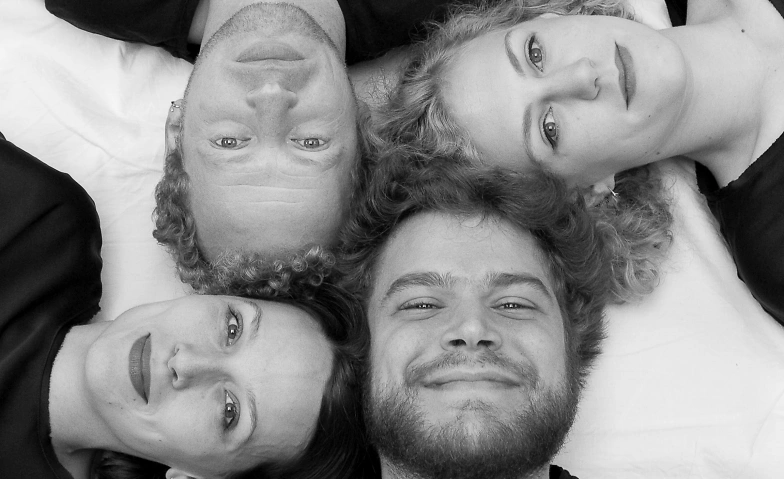
Here comes the sun
- 8:00 pm
- Jun 12, 2027
- Trotte Arlesheim, Ermitagestrasse 19, 4144 Arlesheim, Switzerland
Ready to Host an Event?
Create, manage, and promote your event in minutes.