

Next Relations - Shaping the Future
 Kirchplatz 14, 8400 Winterthur, Switzerland
- Winterthur, Switzerland

 Tuesday | 10:00 am - 12:00 pm
 - Wednesday | 10:00 am - 12:00 pm
- Friday | 10:00 am - 12:00 pm
- Saturday | 10:00 am - 12:00 pm
- Sunday | 10:00 am - 12:00 pm
- Thursday | 10:00 am - 8:00 pm
 0
0 0
0 0
0
Description
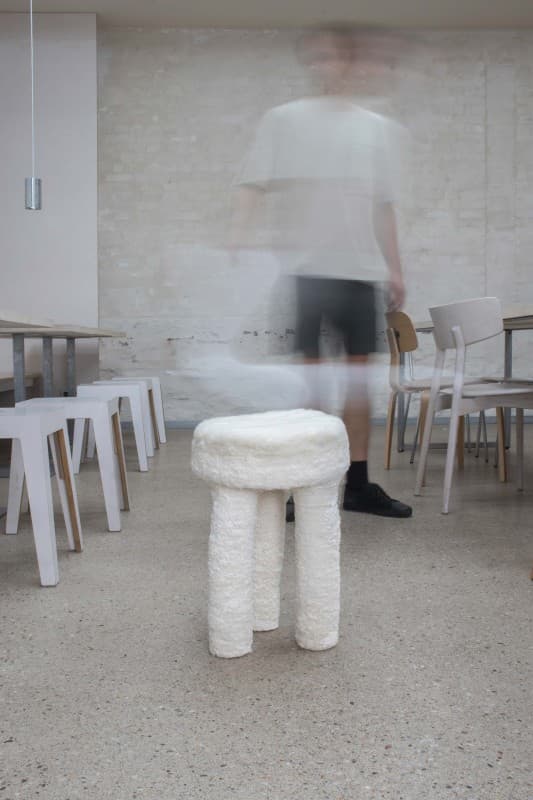
How do we want to live, produce, and interact in the future? The Gewerbemuseum Winterthur regularly addresses the questions and visions of the younger generation and offers students and young designers a platform to present their ideas for shaping our future. The challenges of climate change, resource scarcity, and social change demand new perspectives and people who take responsibility. "Next Relations – Shaping the Future" shows how aspiring designers understand this responsibility and what impulses they develop for a sustainable future. The Gewerbemuseum Winterthur takes a look into the future with "Next Relations – Shaping the Future" and presents semester projects by students of the Industrial Design program at Burg Giebichenstein University of Art and Design Halle/DE. The focus is on the importance of circular economy and sustainable design for the next generation of designers. How can we produce and consume more sustainably in the future? What can and must design achieve? What visions do the students create and what can we learn from their ideas for shaping our future? The exhibition invites visitors to experience design as an open practice within a network of complex relationships – with the goal of developing conceptual models for a shared future. The challenges of our time are too complex to be solved in isolation. Therefore, new forms of collaboration and broader, interdisciplinary concepts are needed to find answers to these questions. Design today faces more than ever the task – and opportunity – to reposition itself: not only for classic problem-solving but also as a mediating role amid complex relationships. Designers can thus link scientific knowledge, local experiences, technological developments, ecological conditions, and perspectives of human and non-human actors. The Gewerbemuseum Winterthur and Burg Giebichenstein University of Art and Design Halle/DE are closely connected as members of the "Material-Archiv" association. The strong practice orientation of the university was also decisive for the invitation to this exhibition. Students are encouraged early on to find partner institutions for their field research and to engage in collaborations for innovative designs and projects. RETHINKING THE DESIGN OF THE FUTURE
The variety of possibilities to shape products and applications with materials and technologies is already immense today. New ones emerge daily. The question is: Where do we want to direct these potentials? Especially in a time marked by uncertainty? Many future topics – sustainability foremost – have become more relevant and urgent than ever. It is no longer just a question of environmentally friendly materials and technologies. A fundamental rethinking and interdisciplinary dialogue are needed for a sustainable future. In two projects, students of Burg Giebichenstein University of Art and Design Halle/DE, Industrial Design program, addressed these questions. In the module "Sorry, we are open!" they questioned consumption habits and designed circular service and usage concepts with corresponding products. Additionally, in the module "Microbial Factories," they examined how microbial processes, mechanical shaping, and local resources can be interwoven. All results show: the future is not created alone – but in the joint design of connections that were previously unthinkable. SHARING, BORROWING, UPDATING, REPAIRING, COMPOSTING, CIRCULATING, EXCHANGING
Sustainable consumption is becoming increasingly important for many people, and they are more willing to change their habits. This concerns, besides living, working, and mobility, especially short-lived consumer goods. They want to buy products made from recycled materials or regional products, use things longer and have them repaired – even spending more money for it. They also want to borrow products instead of owning them, share their possessions or know-how. At the same time, interest grows in knowing where products come from and what impact consumption has. With ideas like sharing, borrowing, updating, repairing, composting, selling, circulating, exchanging, or adapting, students in the project "Sorry, we are open!" make alternative business models imaginable and show possible ways of consumption. Resources should be conserved, materials kept in the cycle, and sustainable actions made tangible in everyday life. BIOBASED PRODUCTION: DECENTRALIZED, REGENERATIVE, AND TOGETHER WITH MICROBES What if we could use microorganisms not only to produce food like bread, sauerkraut, or cheese but also everyday products as alternatives to plastic? Basic materials for consumer goods are already produced microbially – often in large biorefineries that are inflexible and perpetuate existing dependencies. But how can such processes be implemented smaller, more flexible, and on-site? How can products grow directly into their form? And how can different actors collaborate to develop sustainable production methods? Students addressed these questions in the project "Microbial Factories." They combined biological growth processes with mechanical shaping and experimented with selected microorganisms and self-developed production devices. The result is initial prototypes and material studies that show how biobased production can be designed decentralized, regenerative, and together with microbes. PROJECT MANAGEMENT Burg Giebichenstein University of Art and Design Halle, DE
Prof. Mareike Gast, Professor of Industrial Design / Project Manager BurgLabs
Andreas Wagner, Artistic Staff Industrial Design COOPERATION
"Next Relations" was conceived by Burg Giebichenstein University of Art and Design Halle/DE in collaboration with the Gewerbemuseum Winterthur. EVENTS
The exhibition is accompanied by a broad program of events.
Highlights
- Exhibition of semester projects from Burg Giebichenstein University of Art and Design Halle
- Focus on sustainable design and circular economy
- Platform for young designers and their visions for the future
General Information
The exhibition "Next Relations – Shaping the Future" at the Gewerbemuseum Winterthur presents innovative ideas from students of Burg Giebichenstein University of Art and Design Halle. It addresses the challenges of climate change and resource scarcity and shows how design can contribute to sustainable future development.
Location
Kirchplatz 14, 8400 Winterthur, Switzerland
Loading map...
How to get there

Event Calendar
September 2026

Event Media
More events in Winterthur

 Ticket: CHF 0
Electricity and Magnets
- 10:00 am
- Nov 23, 2023 - Jan 1, 2031
- Technoramastrasse 1, 8404 Winterthur, Schweiz
 Ticket: CHF 0
Mindscapes
- 10:00 am
- Oct 2, 2020 - Jan 1, 2031
- Technoramastrasse 1, 8404 Winterthur, Schweiz
 Ticket: N/A
Backstein Reloaded
- 12:00 am
- Jun 12 - Nov 1, 2026
- Gewerbemuseum Winterthur, Kirchplatz 14, 8400 Winterthur, Switzerland
Ready to Host an Event?
Create, manage, and promote your event in minutes.