

Artists between Glamour and Misery of the Weimar Republic
 An der Urania 17, 10787 Berlin, Germany
- Berlin, Germany

 0
0 0
0 0
0
Description
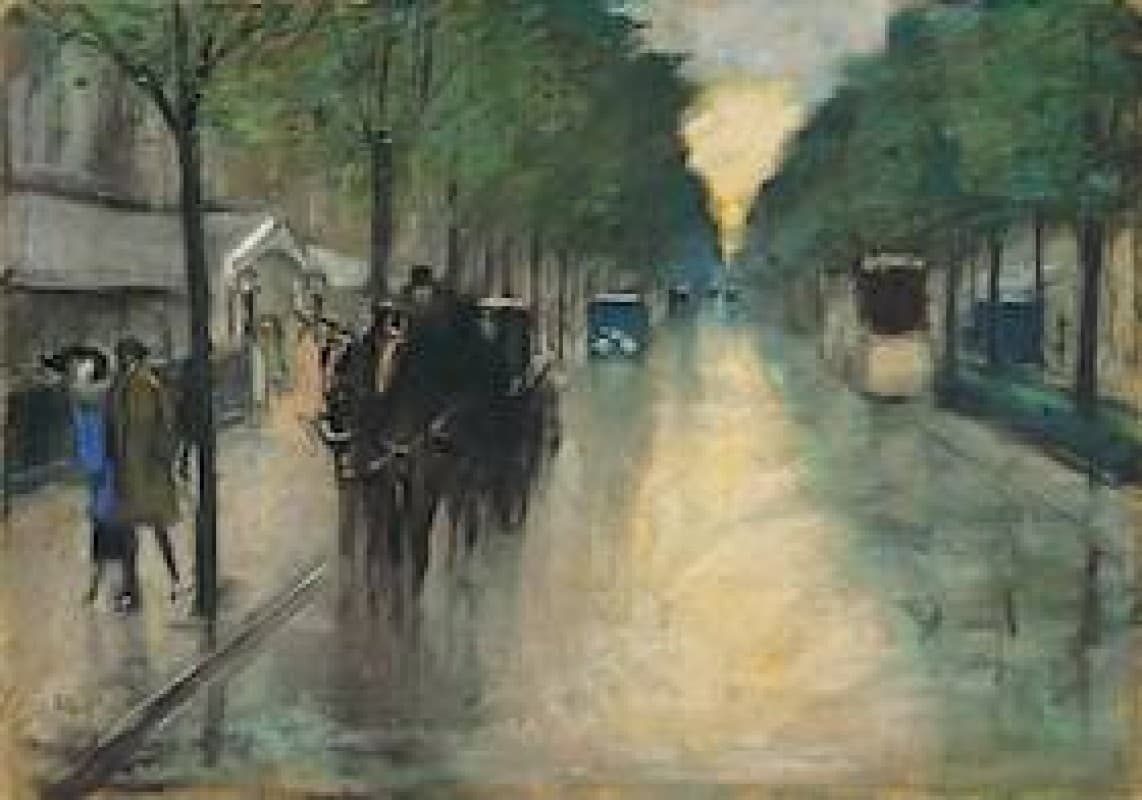
The Weimar Republic was a society in a state of emergency: hyperinflation, mass unemployment, and political violence on the streets contrasted with an unprecedented cultural awakening. Berlin became the world capital of modernity – and art became the seismograph of this contradictory era. The artistic responses to this upheaval varied greatly. Lesser Ury adhered to impressionistic forms and captured the fleeting city life in the glow of Berlin's metropolis. Otto Dix and Georg Grosz, on the other hand, radicalized their visual language: emerging from the anarchic impulse of Dadaism, they developed Neue Sachlichkeit – a ruthless, often bitterly satirical inventory between war trauma, decadence, and the rising fascism. Otto Nagel and Karl Hofer chose the path of expressive realism, focusing on the losers of modernity: the poor, the disenfranchised, the forgotten. Despite their stylistic differences, they shared a common impulse: art as a reaction to societal upheaval, as attitude, and as a record of the times. The special exhibition "Ruin and Rausch" at the Neue Nationalgalerie features impressive works by all these artists. Art historian Thomas R. Hoffmann takes this as an opportunity to present additional works beyond the current exhibition and to place them in a thematic, content-related, and stylistic dialogue. Image: Lesser Ury – In den Zelten (Berlin-Tiergarten) 1920s (excerpt)
Highlights
- Special exhibition "Ruin and Rausch" at the Neue Nationalgalerie
- Art historian Thomas R. Hoffmann presents additional works
- Thematic dialogue about the art of the Weimar Republic
General Information
The event highlights the artistic reactions to the societal upheavals of the Weimar Republic. Focus is on works by artists such as Lesser Ury, Otto Dix, and Georg Grosz, representing different styles and perspectives.
Location
An der Urania 17, 10787 Berlin, Germany
Loading map...
How to get there

Event Calendar
October 2026

Event Media

More events in Berlin

 Ticket: CHF 58.48
My Hero Academia - In Concert 2026
 8:00 pm
- Oct 1, 2026
- Mercedes-Platz 2, 10243 Berlin Friedrichshain, Germany
 Ticket: CHF 27.6
Annika Sala - Spirit Warrior
- 8:00 pm
- Oct 6, 2026
- Gleimstraße 31, 10437 Berlin, Germany
 Ticket: CHF 28.07
BEBILDERTER LECTURE: "The Traveler - Georg Forster and the Discovery of Humanity"
- 8:15 pm
- Oct 13, 2026
- Schloßstraße 109/110a, 12163 Berlin, Germany

Ready to Host an Event?
Create, manage, and promote your event in minutes.