

Retrospective Wim Wenders (Part 1)
 Avenue du Théâtre 6, 1005 Lausanne, Switzerland
- Lausanne, Switzerland

 Monday | 2:00 pm - 11:00 pm
 - Tuesday | 2:00 pm - 11:00 pm
- Wednesday | 2:00 pm - 11:00 pm
- Thursday | 2:00 pm - 11:00 pm
- Friday | 2:00 pm - 11:00 pm
- Saturday | 2:00 pm - 11:00 pm
 0
0 0
0 0
0
Description
Wim WendersBorn in 1945 in Düsseldorf. Anyone who grows up in West Germany after the war and possesses a sense of images and language inherits ruins and wounds. Anyone who grows up there at that time lives in urban landscapes still partly bombed or rebuilt in haste and speaks a language still marked by Nazi vocabulary, which, like the cities, must heal. But those who grow up this way also live with images from screens, sounds from radio, and a soundtrack from elsewhere; images and sounds that open a vast horizon and leave room for desire; images and sounds coming from America. Wim Wenders, perhaps more than any other post-war artist, has found a form to express this condition. Der amerikanische Freund (The American Friend), played by Dennis Hopper, director and star of Easy Rider, is a character that offers a key to understanding Wenders' work. Initially, a simple incarnation among many in cinema, of Patricia Highsmith's eponymous novel, Ripley, this charismatic art dealer and con artist becomes in Wenders' work a symbol of the seductive power of American popular culture. And it is perhaps precisely because it is about post-war reality, to which the whole world ultimately participated, that the form Wenders found to describe post-war German reality did not remain confined locally. If Wenders' films also met great success in South America or Japan, it is because his expressions are transposable and entered world cinema, just as universal literature (a term by Christoph Martin Wieland) from Germany had before. Early in his career, Wenders also collaborated with poet Peter Handke, co-author of the screenplay for perhaps his most famous film, Der Himmel über Berlin (Wings of Desire). Handke, like Paul Celan, was not originally from Germany (Celan was from Bukovina, now in Ukraine, Handke from Carinthia, Austria); like the latter, he rejected Adorno's assertion that there could be no poetry in the German language after Auschwitz. While Wenders was inspired by Handke at key moments in his work, it is also because in Handke's works, the German language found a new life after Nazism and poetry found a future there. If we had to categorize Wenders' contribution to world cinema, it would mainly be two genres he reinterpreted meaningfully beyond clichés: the road movie – Im Lauf der Zeit (In the Course of Time) and Paris, Texas – and the artist portrait – Nick's Movie (Lightning Over Water), a homage by Wenders to Nicholas Ray, Tokyo-Ga, a portrait of Tokyo city which is mainly a tribute to Ozu, and Pina, a 3D film dedicated to the greatest dance theater choreographer of the 20th century, Pina Bausch. Our homage will reveal how Wenders' formal innovations still speak of our condition of life in the 21st century.
Highlights
- Screening of Der Stand der Dinge
- Presence of Wim Wenders
- Retrospective dedicated to the German filmmaker
General Information
The Swiss Film Archive in Lausanne hosts a retrospective dedicated to Wim Wenders, with a screening of his film Der Stand der Dinge. This event highlights the work of one of the greatest German filmmakers of the post-war era.
Location
Avenue du Théâtre 6, 1005 Lausanne, Switzerland
Loading map...
How to get there

Event Calendar
October 2026

Event Media


More events in Lausanne

 Ticket: CHF 0
Spring 2026 Collections
- 10:00 am
- May 1, 2026 - Feb 28, 2027
- Place de la Riponne 6, 1005 Lausanne, Schweiz
 Ticket: N/A
Ella Maillart. Photographic Narratives
- 12:00 am
- Mar 6 - Nov 1, 2026
- Place de la Gare 17, 1003 Lausanne, Schweiz
 Ticket: CHF 0
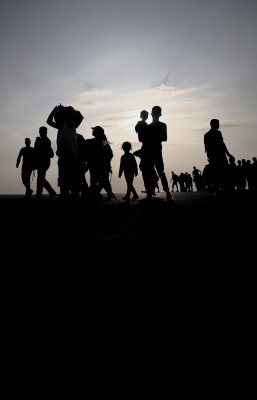
Flucht-Fuir: In the footsteps of refugees
- 12:00 am
- Jan 1 - Dec 31, 2026
- Rue St.-Martin 36, 1005 Lausanne, Schweiz

Ready to Host an Event?
Create, manage, and promote your event in minutes.