

Ernst Ludwig Kirchner reinvents himself
 Kirchstrasse 26, 3114 Wichtrach, Schweiz
- Wichtrach, Switzerland

 Tuesday | 2:30 pm - 5:30 pm
 - Wednesday | 2:30 pm - 5:30 pm
- Thursday | 2:30 pm - 5:30 pm
- Friday | 2:30 pm - 5:30 pm
 0
0 0
0 0
0
Description
Ernst Ludwig Kirchner reinvents himself. The transition to the 'New Style' in the middle of the Davos years Galerie Henze & Ketterer Wichtrach/Bern 21.10.2025 – 30.10.2026 curated by Alexandra Henze The exhibition is dedicated to Ernst Ludwig Kirchner's works of the so-called “New Style” – a creative phase that the artist developed from the mid-1920s and continued until the mid-1930s. Over two floors, a distinctive exhibition unfolds, which, based on selected paintings on the ground floor and works on paper in the basement, makes the characteristic features, developments, and peculiarities of this “New Style” comprehensible. The aim is to give this phase within Kirchner's oeuvre the recognition it deserves. With this exhibition, our gallery also contributes to the currently intense engagement with Kirchner's work and the New Style – as expressed prominently in the current presentations at the Kunst Museum Bern (Kirchner x Kirchner), the LWL Museum of Art and Culture in Münster (Kirchner and Picasso), the Kunsthalle Mannheim (Kirchner, Lehmbruck, Nolde), and the Kirchner Museum Davos. Ernst Ludwig Kirchner first came to Davos in 1917 for recovery reasons and found his new source of inspiration in the mountains around the Alpine town. He brought stylistic features from his artistic time in Berlin and reinterpreted them, resulting in masterpieces of landscape depiction in his typically nervous painting style with angular hatching and pronounced color contrasts. The Berlin cocottes, who enlivened his famous street scenes, slipped into the roles of mountain peasant women, the Berlin clients into those of farmers at work. Following Giovanni Giacometti, Giovanni Segantini, and Ferdinand Hodler, the city painter developed into one of the most important interpreters of the Alpine veduta: mountains, farmers, and cows experienced their sublimation in his works as central, celebrated, and excellently staged motifs. The calm and seclusion Kirchner found in and around Davos led him to a new bloom of expressionist expressiveness with equal force and intensity. However, Ernst Ludwig Kirchner would not have been a master of painting, drawing, graphics, sculpture, and photography if he had not continued to develop and thus reinterpreted the majesty of his early Davos period for a stylistic change, which led Kirchner to his “New Style,” which we want to present in more detail in this exhibition. The artist had already lived on the edge of the Alpine town for several years and had captured his surroundings and life at altitude from all sides and in all facets when this stylistic change occurred in his painting: the color surfaces calmed down, became more homogeneous, and were captured by intertwined, alternately concave and convex lines, so that broadly designed rounded shapes alternated in strong color contrasts and produced monumental painting. Motif-wise, Kirchner remained true to himself throughout his life and created, from his early Dresden beginnings through the Berlin years, the early Davos period, and the New Style to the late Davos period, obsessively repeated bathers and nudes in studio settings or landscapes, circus or variety shows, as well as sporting activities often with horses, as well as fruit and flower still lifes or city and mountain landscapes. Thus, from the mid-1920s of the last century, we encounter a Kirchner who completely reinvented himself and developed into a novel bloom. Until the mid-1930s, he created in this new style, refined it, and applied it imaginatively in all techniques. The exhibition with 17 paintings – including some rarely shown works – as well as numerous works on paper offers an impressive insight into the diversity of Kirchner's motifs and techniques and brings his “New Style” to life in all its facets. Strictly speaking, we cannot speak of a late style here, as the artist was just in his mid-forties to mid-fifties, thus in the prime of his life, but also because Kirchner changed his artistic direction once again at the very end. While the works of the “New Style” always start from a sensory impression but still appear abstracted, with objects simplified and depicted from multiple perspectives, the very last works before his death were to become more naturalistic again. The “New Style” can therefore be seen as a completed phase that successfully demonstrates Kirchner's urge to find a very personal mode of expression. Kirchner sought and found his language and style, which represented him authentically and made him unique in the art world. Every work of this creative period shows certain characteristics that unmistakably identify it as a masterpiece of the artist from this time. Alexandra HenzeHighlights
- Exhibition on Ernst Ludwig Kirchner's 'New Style'
- Works from the 1920s to 1930s
- Curated by Alexandra Henze
General Information
The exhibition at Galerie Henze & Ketterer in Wichtrach presents works by Ernst Ludwig Kirchner documenting the transition to his 'New Style'. It is open from October 21, 2025, to October 30, 2026, and includes paintings as well as works on paper. The presentation contributes to the current discussion about Kirchner's work.
Location
Kirchstrasse 26, 3114 Wichtrach, SchweizHide Map
Loading map...
How to get there

Event Calendar
September 2026
Sunday
Monday
Tuesday
Wednesday
Thursday
Friday
Saturday
30
31
1
2
3
4
5
6
7
8
9
10
11
12
13
14
15
16
17
18
19
20
21
22
23
24
25
26
27
28
29
30
1
2
3

Event Media


More events in Wichtrach

Culture
 Ticket: N/A
Kirchner and Baselitz. Remix: Repetition in Woodcut
- 2:30 pm
- Jun 10 - Oct 30, 2026
- Kirchstrasse 26, 3114 Wichtrach, Schweiz
Culture
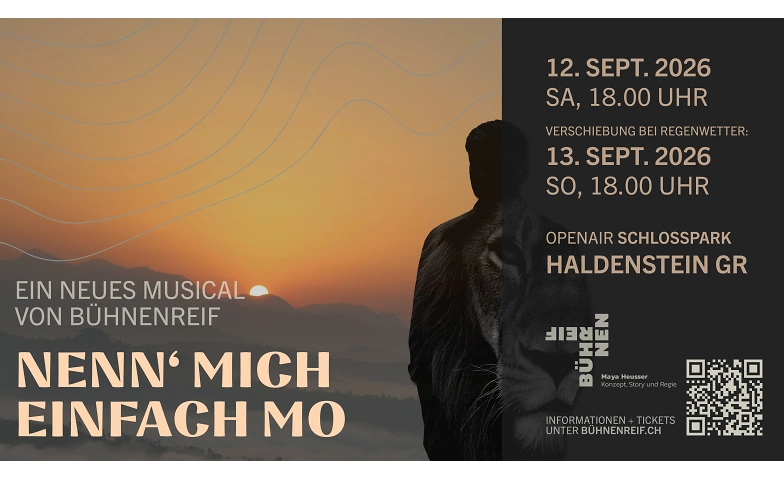
Ticket: CHF 25Musical: Nenn' mich einfach Mo
- 7:30 pm
- Nov 21, 2026
- Mehrzweckhalle am Bach, Wichtrach, Schulhausweg 2, 3114 Wichtrach, Switzerland

Culture
Ticket: N/APhotography Course for Children - Here Children Become Photo Artists!
- 9:00 am
- Jun 19, 2027
- Eigerweg 4, 3114 Wichtrach, Switzerland
Ready to Host an Event?
Create, manage, and promote your event in minutes.