

Swiss Agriculture: The Importance of Livestock and Animal Husbandry
 Hauptbahnhofstrasse 8, 4500 Solothurn, Schweiz
- Solothurn, Switzerland

 0
0 0
0 0
0
Description
Did you know that only about 30% of the agricultural land can be used for crop farming? On the remaining 70%, grass grows, which can only be utilized by ruminants such as dairy cows and beef cattle. These animals are now also being blamed for climate change. So where should animal husbandry develop?
This course section discusses the development and importance of today's animal husbandry for Swiss agriculture. Various forms of husbandry and production methods (free-range, floor housing, IP-Suisse, organic, etc.) as well as the impacts on climate and ecology are examined.
In 2024, Switzerland counted 530,000 dairy cows, about 600,000 beef cattle, 1.28 million pigs, 3.8 million laying hens, and 8.1 million broiler chickens. Additionally, sheep, goats, horses, alpacas, deer, and bison are kept on Swiss farms. The Swiss Animal Protection Act is considered the strictest in the world.
51% of the agricultural production value comes from animal husbandry, 34% from crop farming. More than 70% of the agricultural land is unsuitable for cropping due to climatic and topographical conditions. The roughage growing there can only be utilized by ruminants such as cattle, sheep, and horses. Pig farming also plays an important role: the omnivores utilize around 140,000 tons of by-products from food production.
Course instructor: Franziska Borer, Dipl. Ing. Agr. ETH, Agricultural and Environmental Educator
Highlights
- Focus on the development of animal husbandry in Switzerland
- Discussion on various husbandry forms and their climate impacts
- Course led by Franziska Borer, Dipl. Ing. Agr. ETH
General Information
The course covers the importance of animal husbandry in Swiss agriculture and its impact on climate and environment. It is part of a four-part series and takes place at the Volkshochschule Solothurn.
Location
Hauptbahnhofstrasse 8, 4500 Solothurn, Schweiz
Loading map...
How to get there

Event Calendar
November 2026

Event Media


More events in Solothurn

 Ticket: CHF 0
E-Book-Sprechstunde
 2:00 pm
- Sep 17 - Dec 17, 2026
- Zentralbibliothek Solothurn, Bielstrasse 39, 4500 Solothurn, Switzerland
 Ticket: CHF 15
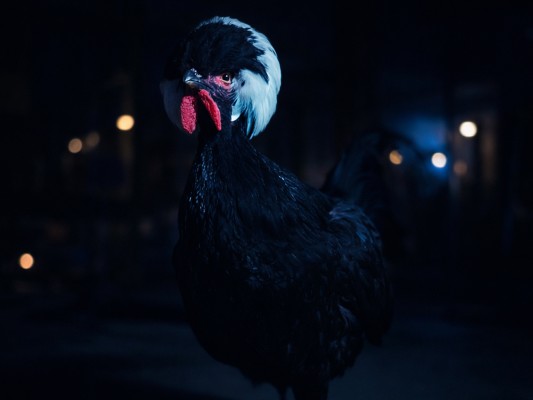
Night at the Chicken Coop – an Experience at the Natural History Museum
- 7:30 pm
- Oct 1, 2026
- Klosterplatz 2, 4500 Solothurn, Switzerland
 Ticket: CHF 307.5
DAUERWELLE LOOK & LEARN mit BARBERKAAN
- 10:00 am
- Oct 4, 2026
- BARBERKAAN, Löwengasse 3, 4500 Solothurn, Switzerland


Ready to Host an Event?
Create, manage, and promote your event in minutes.