


Description
Stage reading by the Basalttheater with Sophie Eglin. Musical accompaniment by Alma Ambrosi-Santamaria on piano with works by Chopin and Schumann. A piece of world literature from 1924 about the abuse of a young woman. Assaults are diverse. A current topic. The inner monologue of a woman in a hotel lobby. The Basalttheater has been producing full-length productions annually for eleven years, along with occasional readings and staged readings. We are committed to high-quality texts. We aim to preserve and highlight the literary quality of Arthur Schnitzler in our adaptation. This summer's project is a treasure. Arthur Schnitzler's short story 'Fräulein Else' from 1924 is a piece of world literature: Else is 19 years old and is actually searching for her first love. We used Gottfried Greiffenhagen's stage adaptation as a starting point, shortened, edited, staged as a reading, and supplemented with music. We have reinforced the connection with the audience through staging and avoided the voyeuristic aspect of nudity on stage. It is an inner monologue of a young woman, who in Vienna of that time is asked by her mother to inquire whether the wealthy Mr. Dorsday can lend money to her nearly bankrupt father. The wealthy man only agrees if Else shows herself naked. Else is abused by her father and mother and sexually exploited by the wealthy Mr. Dorsday. The parents risk that Else will be abused. They pressure her, and Dorsday exploits this. His intention to only 'see' her naked humiliates Else. This situation leads Else into a crisis. She demonstrates herself naked in front of everyone in the hotel instead of just Dorsday and indirectly accuses him. In the end, it is unclear whether she has taken her own life with an overdose of sleeping pills or if she is overcoming her confusion. She falls into a state of confusion; she can no longer distinguish reality from fear. For this complex range of tension in Else's character, a professional and versatile actress is needed, which we found in Sophie Eglin. Additionally, Alma Ambrosi-Santamaria performs pieces by Chopin and Schubert, which are mentioned in the text. A pianist also plays in the hotel lobby. The wonderful music contrasts and emphasizes Else's situation. The delicate pieces are very emotional and evoke genuine life-long desires and the caution of young Else in her pursuit of love. Relevance: "The novella published in 1924 about abuse of power and objectification of women touches on themes such as victim exposure and patriarchal structures. Else's moral dilemma (credit assistance from the art dealer in exchange for exposing her body) is a classic form of sexual coercion. The dynamic between a wealthy, powerful man and a dependent young woman still reflects existing power structures today. Else's fear of social ostracism and family ruin (honor and shame) drives her to catastrophe. The question of how much personal shame can be violated by economic or social pressures remains socially relevant." Else's carousel of thoughts and her inner monologue show the extreme breaking point under pressure, isolation, and lack of retreat options in modern society. Else's radical escape—making her inner conflict public by shedding her clothes in front of the hotel society—is the ultimate protest against the diktat of social conventions.
Else is a bit femme fatale and a bit exhibitionist. She enjoys that men notice her youthful beauty. But she does not want to lose her purpose, with whom she enters into a relationship and when. Else is lonely in her youthful adventurousness, her self-satisfaction, and her fantasies. Around 1920, a completely new, modern body image emerged. The young, emancipated woman sought freedom and movement. Around 1920, the human body in art was a complex field of tension. Shaped by the horrors of World War I and the dawn of modernity, representation split between the new, sporty ideal of beauty of the "Golden Twenties" and the ruthless dismantling of the bourgeois image of man. Jena Lisa Jones said at the hearing on the Epstein case: "As a teenager, I lacked the words to understand what was happening to me: I didn't know who I could tell what, where I could turn. We were young and manipulated."
Highlights
- Stage reading by the Basalttheater
- Musical accompaniment by Alma Ambrosi-Santamaria
- Addresses the abuse of a young woman
General Information
The staged reading of Arthur Schnitzler's "Fräulein Else" takes place at the cheesmeyer in Sissach. The event explores current topics through the inner monologue of a 19-year-old woman in 1920s Vienna.
Location
 Hauptstrasse 55, 4450 Sissach, Switzerland
Loading map...
How to get there

Event Calendar
December 2026

Event Media


More events in Sissach
 Ticket: CHF 0
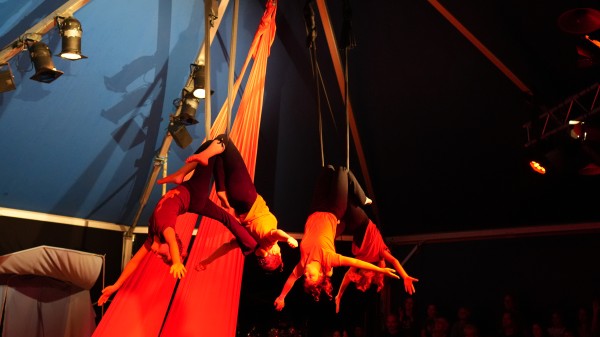
Jugendzirkus Robiano – Und Action!
 8:00 pm
 Sep 30 - Oct 1, 2026
- Bischofsteinweg 13, 4450 Sissach, Switzerland
 Ticket: N/A
Poster Exhibition "Yesterday and Today - 250 Years of Ebenrain Castle Sissach"
- 6:00 pm
- Aug 27, 2026 - Apr 20, 2027
- Itingerstrasse 13, 4450 Sissach, Switzerland
 Ticket: CHF 10
House Tour
- 2:00 pm
- Oct 3 - Dec 5, 2026
- Hauptstrasse 55, 4450 Sissach, Switzerland



Ready to Host an Event?
Create, manage, and promote your event in minutes.