

Ambassador Nativity Scene - Ox and Donkey are there and who else?
 Hauptgasse 75, 4500 Solothurn, Schweiz
- Solothurn, Switzerland

 0
0 0
0 0
0
Description
At the seat of the French "Basidors," the patrician ladies and gentlemen outdid each other with fashion playfulness. Thus, the previously modest depiction of the Christmas scene was transformed into the lavish fashion of the High Baroque and Rococo. Therefore, the enchanting nativity scene is a unique ensemble in Switzerland, a document of Solothurn cultural history. Each of the approximately 60 figures has an astonishingly lifelike wax head with individual facial features, real hair, and glass eyes. The production of wax heads and figures was once a flourishing branch of the artistic work of the nuns at St. Joseph. All interested parties can immerse themselves in the Rococo-Baroque period and learn more about the intact symbolism of the nativity scene and the meaning of Christmas.
God's children exist in many religions. In old depictions, the child is only seen with an ox and a donkey. Why are the animals so important? Why does a deer belong in the nativity scene? The white sheep and the shepherds appear repeatedly in the Bible. God is the shepherd of the people of Israel. In the 18th century, three kings and a queen are depicted. The Queen of Sheba came from the Orient to see King Solomon. She is known among Jews, Arabs, and Christians. In the earliest depictions, the three kings were portrayed as Mithras priests. What has Christianity adopted from the Mithras cult, and how did the wise men become kings? Not only are the kings depicted in a certain way, but their gifts also symbolize Jesus as king, as God, and as healer.
The events from 2000 years ago are critically examined. If one could ever travel back in time, one would certainly find no stable, no ox, and no donkey, because they were not there. But the symbolism is important. If the evangelist Luke had not written down this story, there would be no Christmas tree, no gifts, no shining children's eyes. A tour that enchants.
Highlights
- Unique nativity scene with about 60 figures in Rococo-Baroque style
- Handmade wax heads with individual facial features
- Historical depiction of city life in the 18th century
- Tours on the symbolism and meaning of Christmas
General Information
The exhibition takes place in the Roman Catholic Jesuit Church in Solothurn. It shows a historical nativity scene reflecting city life in the 18th century, including figures such as ox, donkey, kings, and a Queen of Sheba. Interested visitors can learn more about the creation and symbolism of the nativity scene.
Location
Hauptgasse 75, 4500 Solothurn, Schweiz
Loading map...
How to get there

Event Calendar
January 2027

Event Media


More events in Solothurn

 Ticket: CHF 0
E-Book-Sprechstunde
 2:00 pm
- Sep 17 - Dec 17, 2026
- Zentralbibliothek Solothurn, Bielstrasse 39, 4500 Solothurn, Switzerland
 Ticket: CHF 15
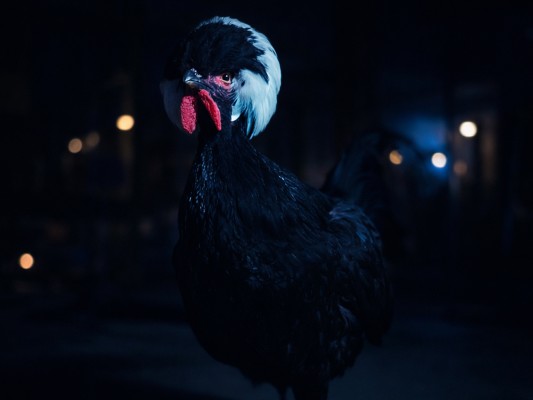
Night at the Chicken Coop – an Experience at the Natural History Museum
- 7:30 pm
- Oct 1, 2026
- Klosterplatz 2, 4500 Solothurn, Switzerland
 Ticket: CHF 307.5
DAUERWELLE LOOK & LEARN mit BARBERKAAN
- 10:00 am
- Oct 4, 2026
- BARBERKAAN, Löwengasse 3, 4500 Solothurn, Switzerland


Ready to Host an Event?
Create, manage, and promote your event in minutes.